Metal spinning features relatively simple equipment and tooling. If dedicated spinning machines are unavailable, ordinary lathes can be used as alternatives. The process can form rotary parts such as cylinders, cones, paraboloids and other rotary components defined by various complex curved profiles.
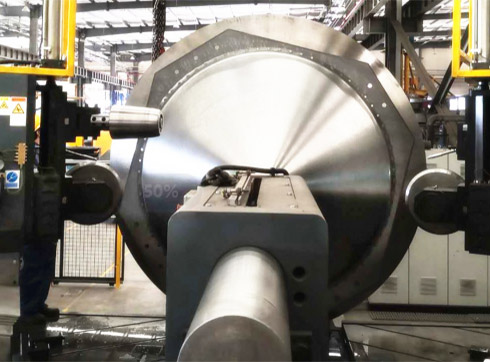
It delivers low production efficiency and involves high labor intensity, making it more suitable for prototype trial production and small-batch manufacturing.
To meet manufacturing demands for aircraft, rockets and missiles, shear spinning (also known as power spinning) has been developed based on conventional spinning technology.